
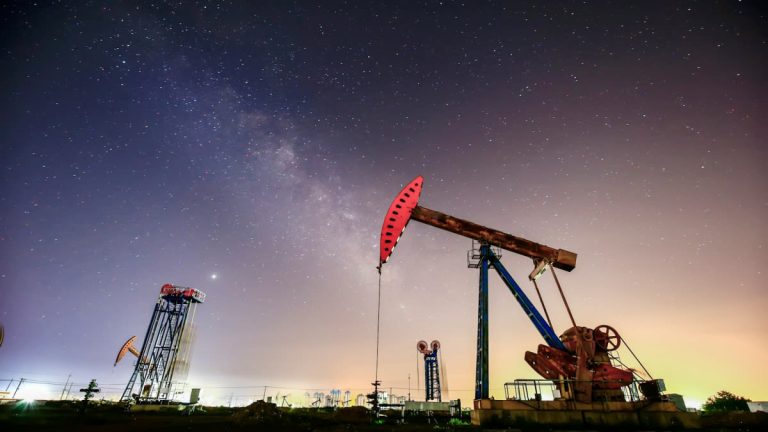
Texas Researchers Say oil and gas wastewater could help cool AI data centers, according to a new University of Texas at Austin study. The work examines whether treating the water could reduce data centers’ pressure on freshwater resources while addressing wastewater from the Permian Basin.
Researchers modeled established desalination methods for use in data center cooling. Their paper, published in the scientific journal Water Research, compares the methods’ energy efficiency. It focuses on cleaning wastewater from oil and gas operations rather than waiting for a new technology. The Yahoo report on the study describes the researchers’ findings and the scale of the water challenge.
The study identifies reverse osmosis as the most efficient method the researchers modeled. But the process struggles with water saltier than seawater, which could limit its use for some wastewater sources.
When reverse osmosis is not feasible, another option is to heat water into vapor and capture the freshwater that results. The source describes this approach as viable but more energy-intensive. Neither approach is new, an advantage Bahadur emphasized: “We’re not waiting for a futuristic technology to come along and solve this problem for us.”
Vaibhav Bahadur, a professor at the University of Texas’ Cockrell School of Engineering and one of the research leaders, said treatment would cost a small fraction of a data center’s total energy footprint. He said that would remain true even with the more energy-intensive option.
Data centers can directly consume as much as 5 million gallons of water per day, according to figures from the Environmental and Energy Study Institute cited in the report. The source also notes that technology companies do not provide a clear picture of their water use, and that some studies suggest direct-use estimates may understate the footprint.
The report describes another part of the water accounting: electricity production. A University of Michigan study found that including offsite water use raised the water footprint of three large AI data centers planned for Michigan by 14 billion gallons.
Shaolei Ren, a professor at the University of California, Riverside, told Bloomberg that indirect water use has received less attention, although it can exceed direct use and affect watersheds and regional water resources. His comments concern the broader accounting of data center water footprints.
The Permian Basin alone generates roughly 790 million gallons of wastewater a day, Bahadur said. The report compares that with the 5 million gallons a large data center can consume in a day, putting the basin’s wastewater volume at more than 150 times that amount.
Bahadur said the wastewater is transported long distances and injected underground. He described that practice as problematic, including because of seismic risk. He also said the industry could run out of burial space as early as 2030, and argued that cleaning the water for data center use could address both sectors’ needs.
The proposal connects water management to the energy infrastructure supporting artificial intelligence. Wealth Tech Daily has also covered energy investment tied to AI power demand and risks involving AI agents. Its coverage of national AI resilience examines another part of the technology’s infrastructure debate.
The researchers’ modeled methods rely on proven processes, but their practical fit depends on the wastewater’s salt level and the energy required for treatment. The study therefore points to a possible reuse pathway, with reverse osmosis favored where the water conditions allow it.
For the Permian, the stated next step is finding a use for wastewater that is now moved and injected underground. Bahadur said cleaning it for data centers could help close that resource loop while supplying cooling water.

Lorem ipsum dolor sit amet, consectetur adipiscing elit. Ut elit tellus, luctus nec ullamcorper mattis, pulvinar dapibus leo.
Lorem ipsum dolor sit amet, consectetur adipiscing elit. Ut elit tellus, luctus nec ullamcorper mattis, pulvinar dapibus leo.